How Much Business Loan Can I Get Based on My Turnover (2026)
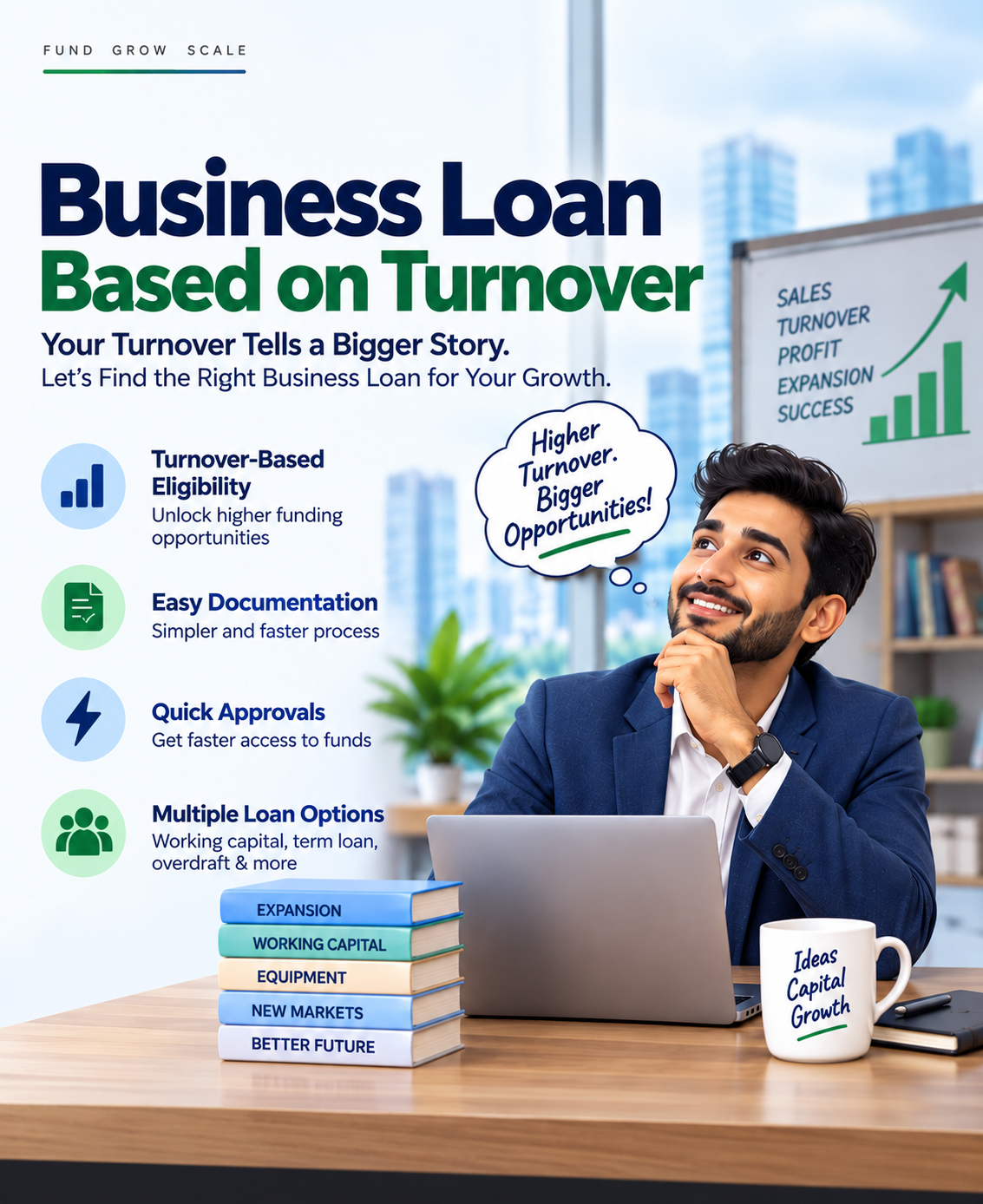
If you’re planning to apply for a business loan, one of the first questions you may have is: How much business loan can I get based on my turnover?
Your annual business turnover is an important factor lenders may consider, but it is not the only factor used to determine your loan eligibility. Lenders may also assess your profitability, banking transactions, credit history, existing EMIs, business vintage, tax filings, and repayment capacity.
This guide explains how business loan eligibility based on turnover works and what you can do to improve your chances of getting suitable business financing.
What Is Business Turnover?
Business turnover generally refers to the total sales or revenue generated by a business during a specific period, usually a financial year.
For example, if your business generates ₹1 crore in sales during a financial year, your annual turnover is ₹1 crore.
However, turnover is different from profit.
A business may have high turnover but low profitability because of high operating expenses, supplier costs, salaries, rent, or other liabilities.
Therefore, lenders usually look at your overall financial position rather than turnover alone.
How Much Business Loan Can I Get Based on Turnover?
There is no single fixed formula that applies to every business loan application.
The eligible loan amount can vary depending on:
Annual turnover
Net profit and cash flow
Business vintage
CIBIL score and credit history
Existing loans and EMIs
Banking transactions
GST and income-tax records
Business type
Loan purpose
Repayment capacity
Collateral, where applicable
Lender’s internal credit policy
Some lenders may use turnover and cash-flow-based assessments, while others may focus more heavily on profitability, banking behaviour, or secured collateral.
Key Factors That Affect Your Business Loan Eligibility
1. Annual Turnover
A higher and consistent turnover can demonstrate business activity and revenue generation.
However, turnover alone does not guarantee approval.
2. Profitability
Lenders may review your profit and loss statements to understand whether the business generates sufficient income to repay the proposed loan.
A business with strong turnover but weak or negative profitability may be assessed differently from a profitable business.
3. Business Vintage
The length of time your business has been operating can also matter.
Established businesses with a consistent operating history may have access to different financing options compared with very new businesses.
4. Banking Transactions
Lenders may review your business bank statements to understand:
Regular customer receipts
Supplier payments
EMI payments
Account balances
Cash-flow patterns
Payment behaviour
A healthy and consistent banking history can strengthen the overall application profile.
5. CIBIL Score and Credit History
Your credit profile can influence both business loan eligibility and the terms offered by a lender.
Before applying, it is useful to check your credit report and make sure existing repayments are up to date.
Read our guide on How to Improve CIBIL Score Before Applying for a Loan.
6. Existing Loans and EMIs
If your business already has several loans, the lender may consider your current repayment obligations before determining additional eligibility.
Higher existing debt can reduce the amount of additional borrowing you may comfortably manage.
7. GST and Tax Records
For eligible businesses, GST returns, income-tax returns, financial statements, and other business records can help demonstrate revenue and financial activity.
Keeping your filings and records updated can make the documentation process easier.
Can a Business With High Turnover Get a Large Loan?
Not necessarily.
A business can have high sales but still have limited borrowing capacity if:
Profit margins are low
Existing EMIs are high
Cash flow is inconsistent
Bank transactions do not support reported sales
Credit history has issues
Tax or financial records are incomplete
This is why lenders generally assess repayment capacity, not just sales turnover.
How to Improve Your Business Loan Eligibility
If you are planning to apply for a business loan for your company or MSME, consider these steps:
Maintain Proper Financial Records
Keep your GST returns, ITRs, profit and loss statements, balance sheets, and banking records updated.
Maintain Healthy Cash Flow
Try to maintain regular business receipts and manage supplier and operating payments properly.
Reduce Unnecessary Debt
Review your existing loans and avoid taking on debt that your business cannot comfortably support.
Maintain a Strong Credit Profile
Pay EMIs and credit obligations on time and avoid unnecessary credit applications.
Choose the Right Loan Amount
Don’t apply for an amount far above your actual business requirement.
A realistic loan request supported by your financial records can make the application more consistent with your business profile.
Can help eligible businesses manage short-term and recurring cash-flow requirements.
Machinery or Equipment Finance
Useful when you need to purchase machinery, equipment, or construction equipment.
Loan Against Property for Business
May be considered when a business owner has eligible property and requires larger secured funding.
Business Loan vs Turnover-Based Loan
The exact structure of financing depends on the lender and product.
Some business finance products may place greater emphasis on turnover and bank cash flow, while others may assess profitability, collateral, or a broader financial profile.
Before applying, compare the:
Interest rate
Loan amount
Processing charges
Repayment tenure
Collateral requirements
Prepayment conditions
Overall repayment cost
Why Choose BorrowRight?
Finding suitable business loan options based on turnover can be difficult because every lender may have different eligibility criteria and assessment methods.
BorrowRight helps business owners understand their funding requirements and explore suitable financing options.
You can explore:
Business Loans
MSME Loans
Working Capital Loans
Overdraft Facilities
Machinery Finance
Construction Equipment Loans
Loan Against Property for Business
BorrowRight can help you understand your eligibility, compare suitable options, and navigate the loan application process based on your business profile.
Looking for a business loan based on your turnover? Contact BorrowRight to explore suitable financing options.
Conclusion
Your annual turnover is an important part of business loan eligibility, but it does not determine the loan amount by itself.
Lenders may also consider your profitability, cash flow, CIBIL score, existing EMIs, banking transactions, business vintage, tax records, and repayment capacity.
Before applying, understand your actual funding requirement and compare suitable business loan options based on your financial profile.
Need help with business financing? Explore suitable Business Loan and MSME Loan options with BorrowRight.
India’s one of the unbiased loan advisor for best deals in loans and unmatched advisory services. We are one stop shop for all types of lending solutions.

 By
By